
Granada · 5–7 November 2026
TechnoSperm presents its animal reproduction research at AERA 2026
In Granada, the group shared new studies on oocyte maturation, sperm function and the preservation of boar semen.
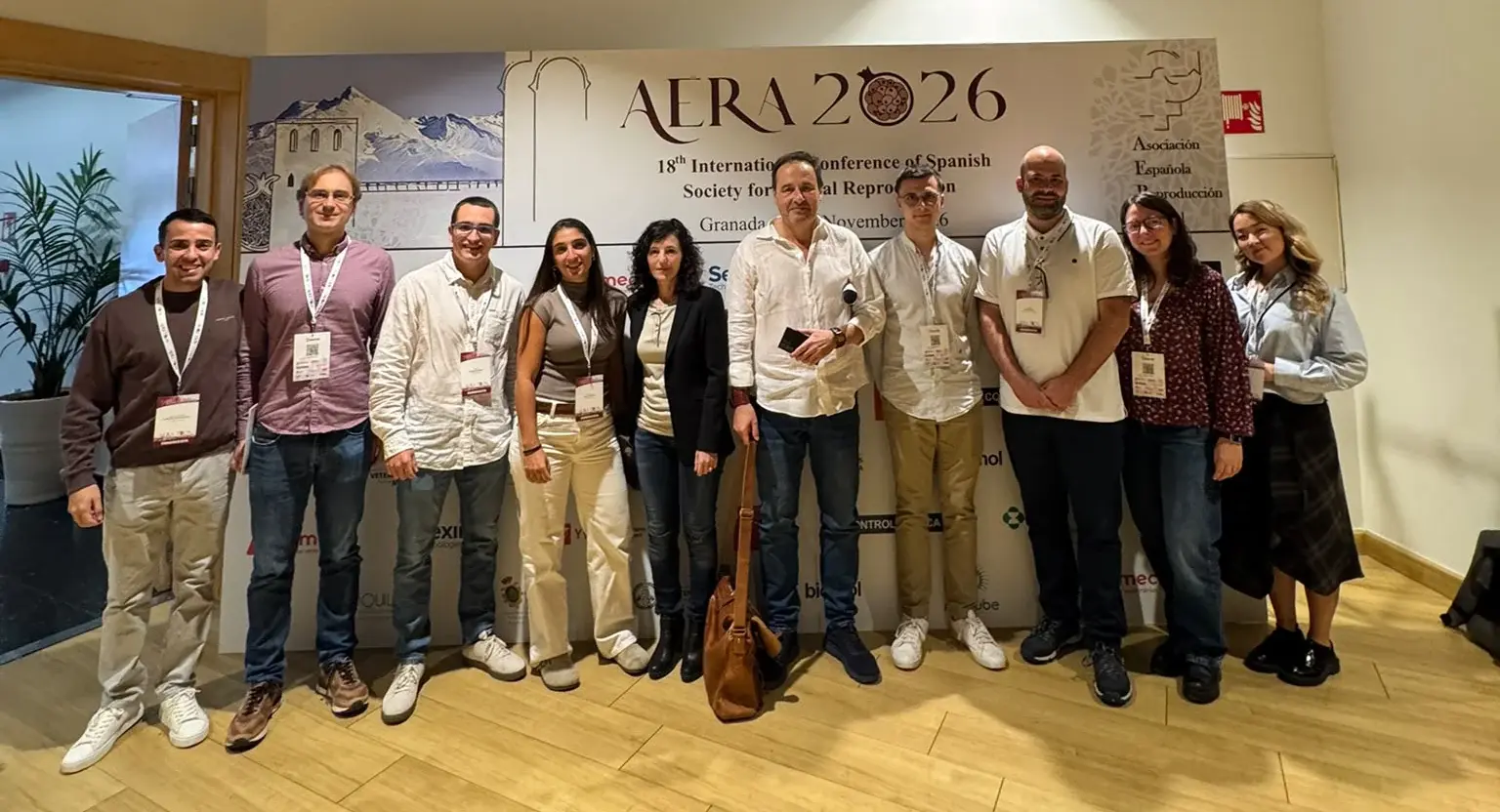
From 5 to 7 November, the Biotechnology of Animal and Human Reproduction research group (TechnoSperm) at the University of Girona took part in the 18th International Congress of the Spanish Society for Animal Reproduction (AERA).
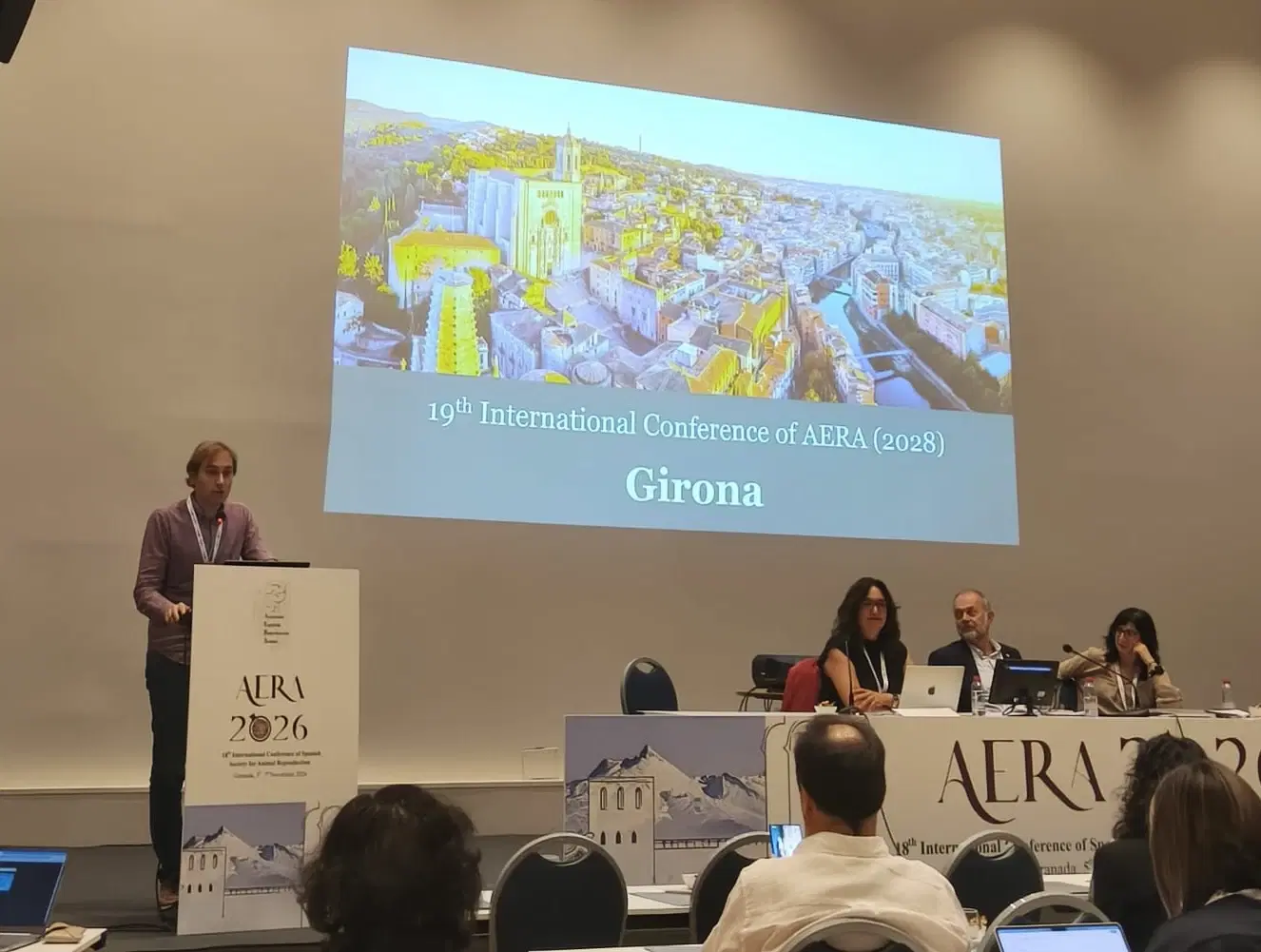
Girona to host the 19th AERA International Congress in 2028
TechnoSperm, the University of Girona’s Biotechnology of Animal and Human Reproduction research group, will organise the next edition of the biennial congress.
The cells that help the oocyte mature
Marc Torres-Garrido gave an oral presentation on cumulus cells, which surround the oocyte and support it as it matures. Working with pig oocytes, the team developed a technique that uses three fluorescent markers to measure viability, the activity of the mitochondria that help produce energy, and levels of reactive molecules derived from oxygen in the same cell. Samples with lower mitochondrial activity also showed lower viability. The method allows researchers to examine how these measures relate during oocyte maturation.
Read Marc Torres-Garrido’s short communication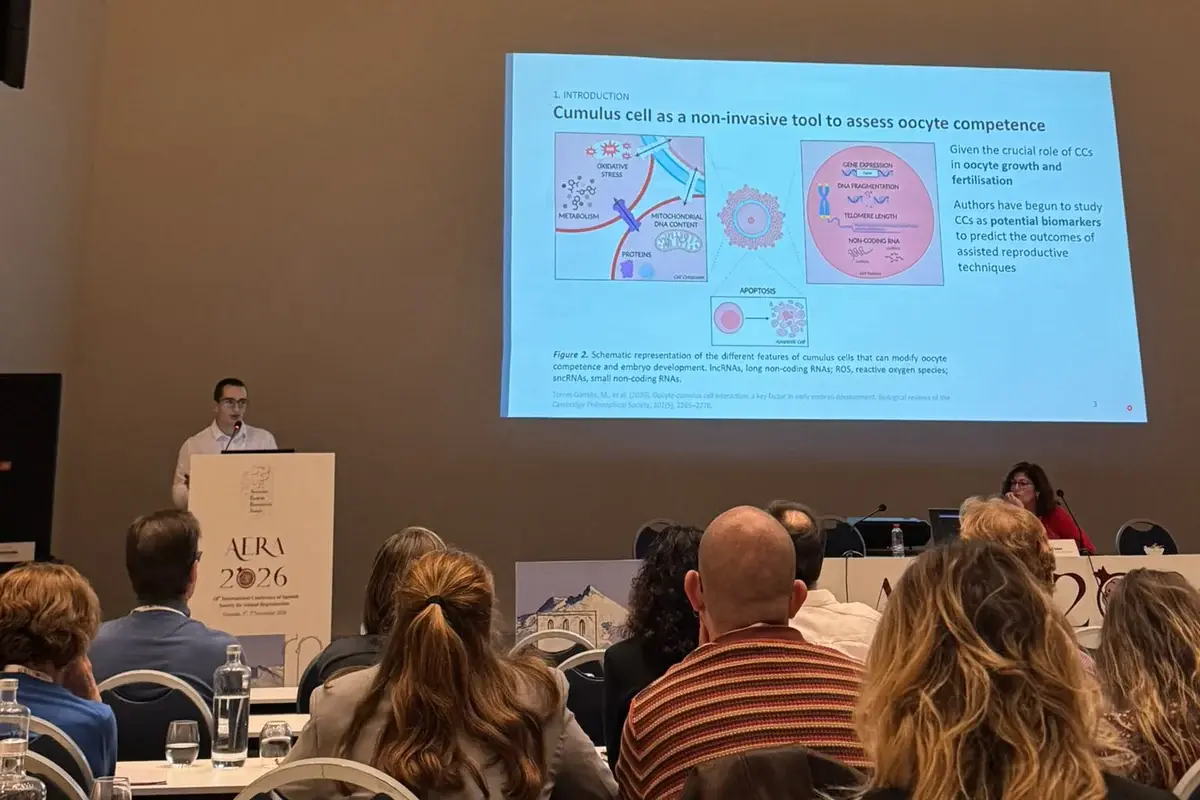
Three posters on oocytes and sperm
The role of calcium in oocyte maturation
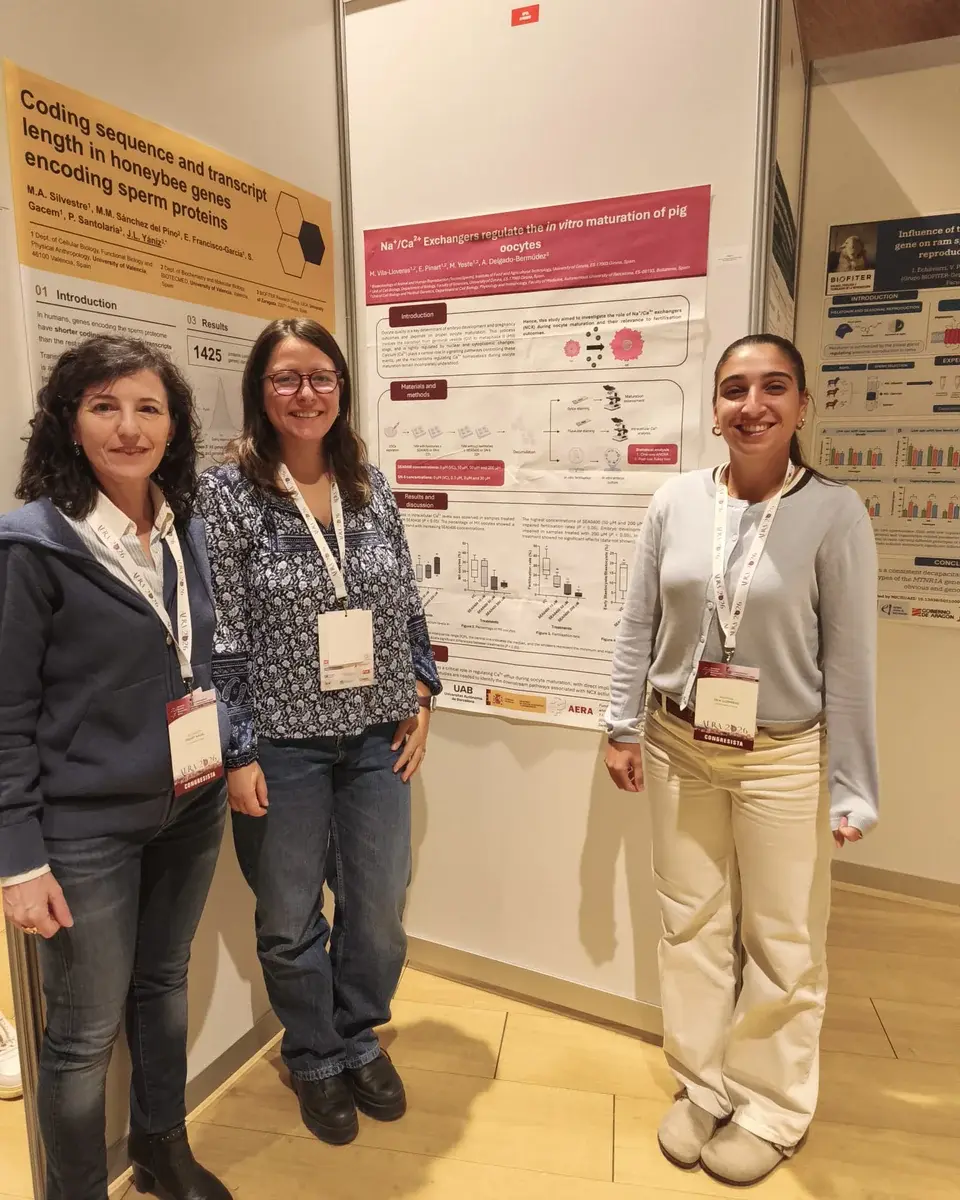
Martina Vila-Lloveras, Elisabeth Pinart and Ariadna Delgado-Bermúdez presented a study co-authored by Marc Yeste. It examined proteins that exchange sodium and calcium across the oocyte membrane. In the laboratory, one of the inhibitors tested reduced the proportion of pig oocytes that completed maturation and, at higher doses, also reduced fertilisation rates. The results point to a role for these exchangers in regulating calcium during maturation.
How does a sperm cell prepare to fertilise an oocyte?
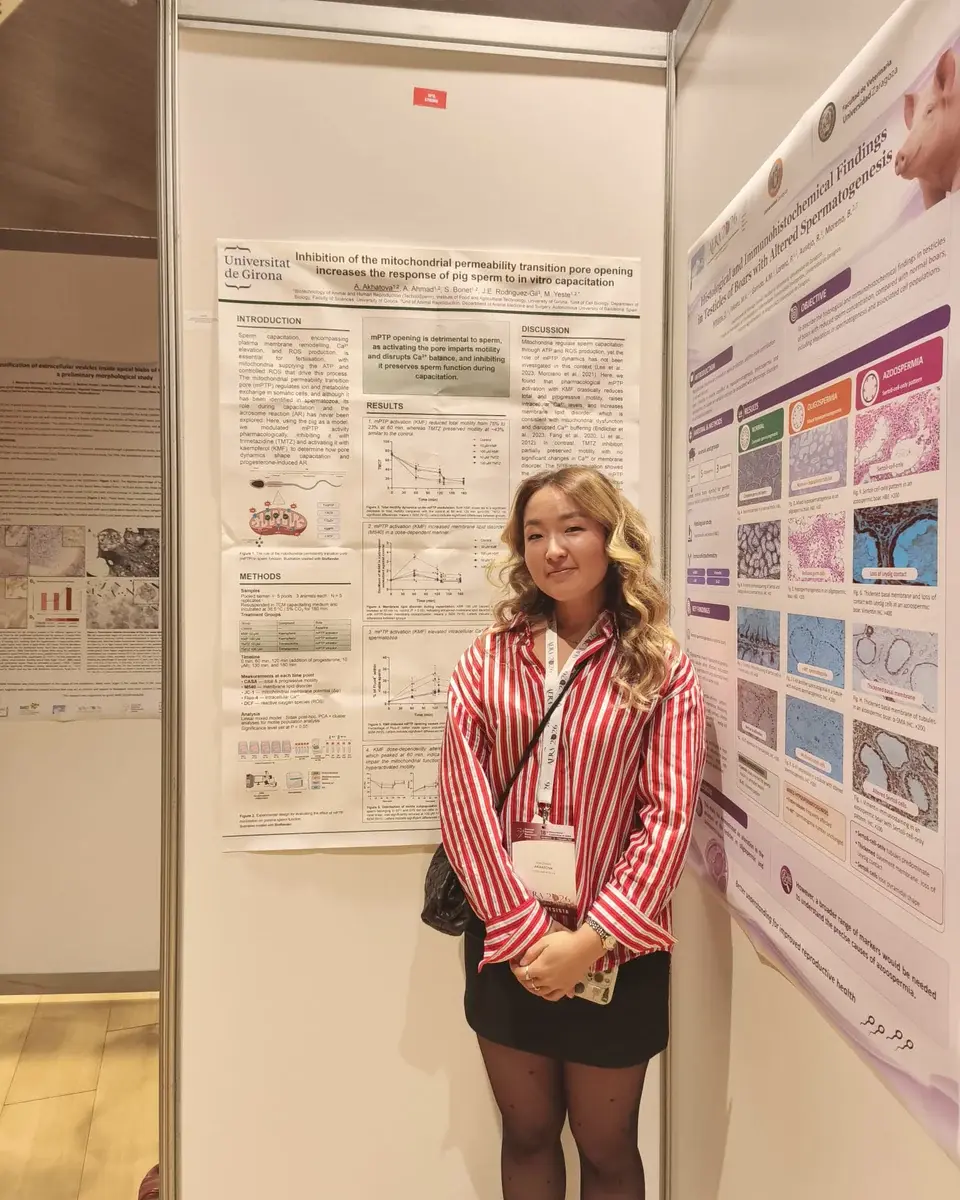
Ayazhan Akhatova studied a mitochondrial pore during capacitation, the series of changes that prepares sperm to fertilise an oocyte. Promoting the opening of the pore in pig sperm reduced motility and altered calcium levels inside the cells. Inhibiting pore opening helped preserve motility during capacitation in vitro.
How does oxygen affect semen preservation?
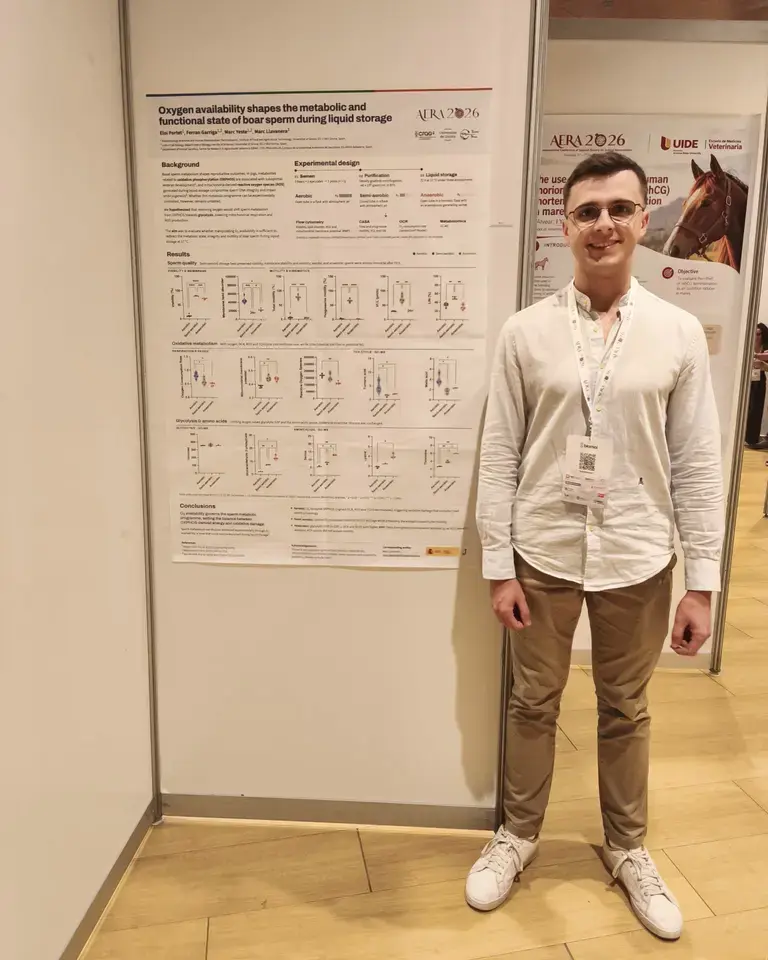
Marc Llavanera presented a poster on work carried out by master’s student and first author Eloi Portet, in a collaboration between the Centre for Research in Agricultural Genomics (CRAG) and the University of Girona. The study, also co-authored by Ferran Garriga and Marc Yeste, examined how oxygen availability during liquid storage affects boar sperm metabolism and function. After 72 hours at 17 °C, samples stored with limited oxygen availability retained better motility than samples stored in contact with air or without oxygen.
Two UAB posters on sperm DNA
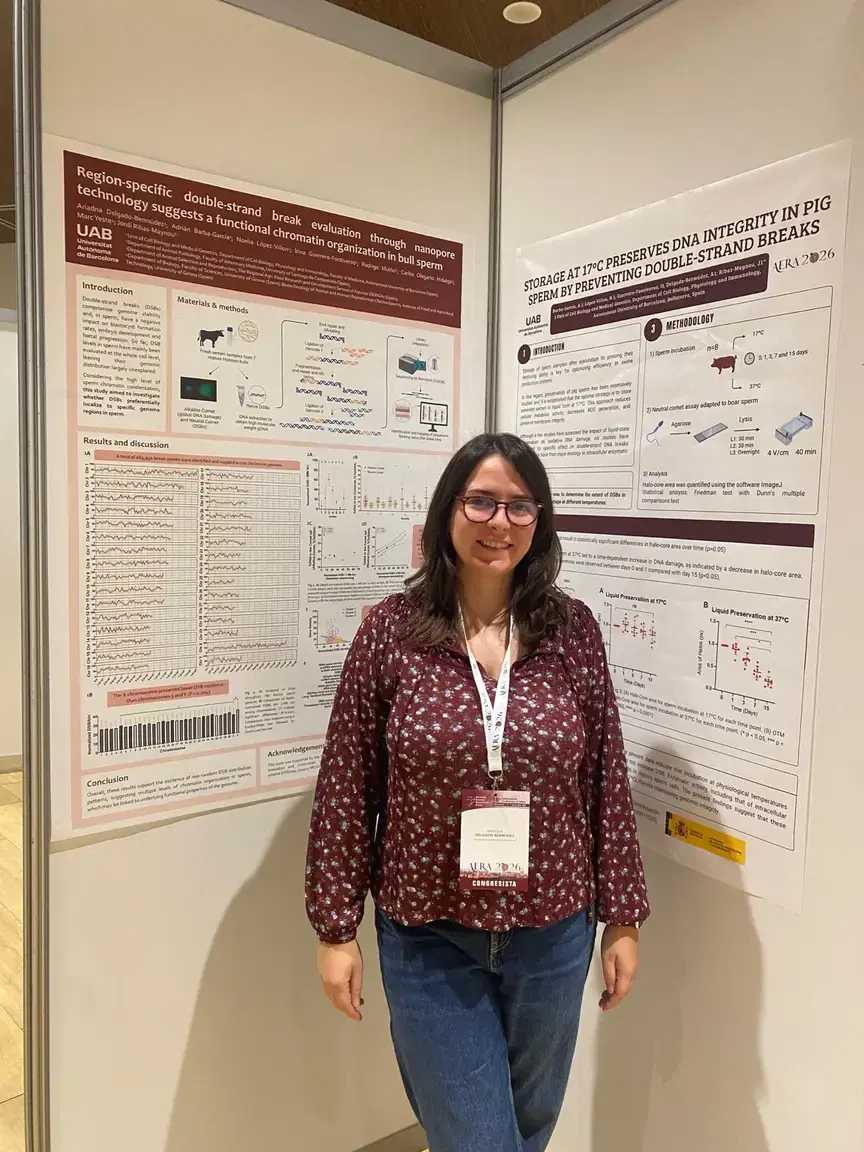
Ariadna Delgado-Bermúdez and Jordi Ribas-Maynou from the Universitat Autònoma de Barcelona (UAB) contributed to two studies on double-strand breaks, which occur when both strands of DNA break.
Where does DNA break in bull sperm?
The study led by Ariadna Delgado-Bermúdez used nanopore sequencing to locate breaks in the genome. The breaks were not distributed at random. The pattern suggests that the way DNA is packaged in sperm may influence which regions are more prone to breaks.
How does storage temperature affect DNA in boar semen?
The study led by Adrián Barba-García compared semen samples stored in liquid at 17 °C and 37 °C. Over the 15-day experiment, the team detected no significant increase in double-strand breaks at 17 °C. At 37 °C, DNA damage increased over time.
Equine reproduction and the immune response
Both contributions on equine reproduction stem from TechnoSperm’s collaboration with Jaime Catalán. His PhD student, Sebastià Company, is the first author of the study featured in the oral presentation.
Cytokines in donkey reproductive fluids
In an oral presentation, Sebastià Company shared a pilot study with Jaime Catalán, Lorena Padilla, Carolina Maside, Jordi Miró and Marc Yeste. The oral presentation received second prize at the congress. The team detected three cytokines in follicular fluid and ten in seminal plasma. These signalling molecules may play a role in follicular maturation and the inflammatory response in jennies after insemination.
Read Sebastià Company’s short communication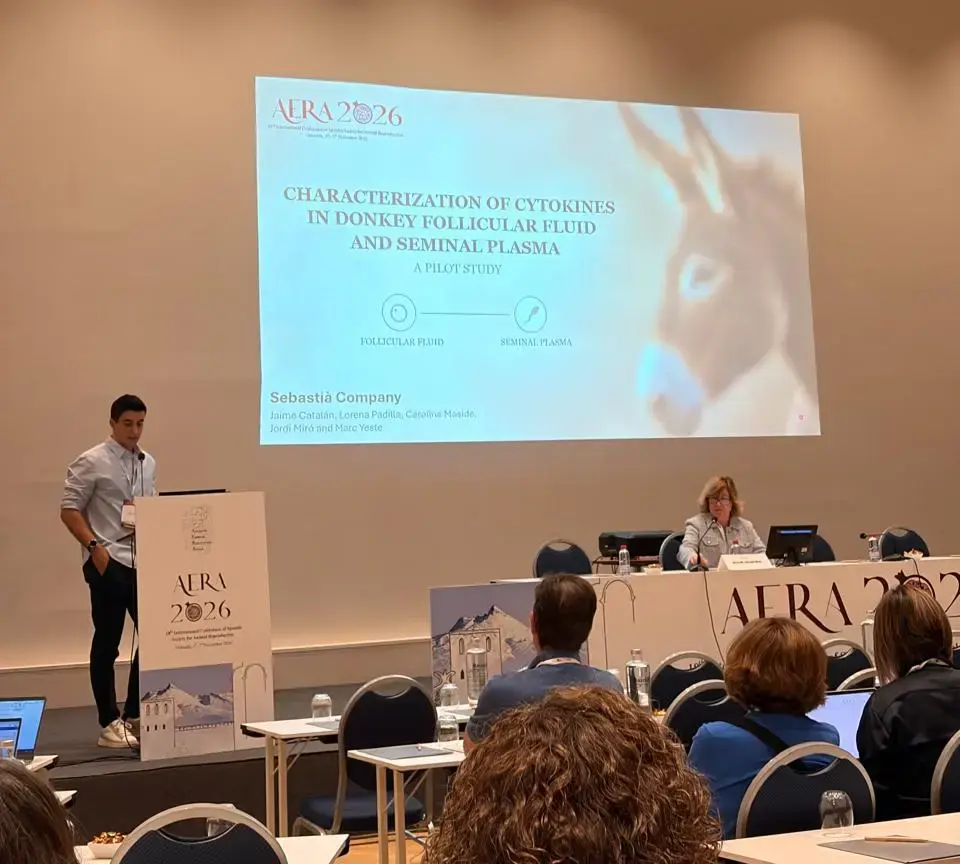
Cytokine profiles in equine seminal plasma
The poster led by Jaime Catalán, with Lorena Padilla, Carolina Maside, Sebastià Company, Sandra Llorens, Sergi Bonet, Marc Yeste and Jordi Miró, characterised the cytokines in the fluid portion of equine semen.
Two short communications with collaborators in Brazil
Carine Dahl Corcini from the Universidade Federal de Pelotas and Antonio Sergio Varela Junior from the Universidade Federal do Rio Grande co-authored two short communications with TechnoSperm. Both were presented in the poster session.
Antioxidants in lipid vesicles for semen storage at 17 °C
The study led by Antonio Sergio Varela Junior tested whether packaging kaempferol, a plant-derived antioxidant, in microscopic lipid vesicles could protect sperm cells. After 48 hours of storage at 17 °C, encapsulated kaempferol reduced markers of oxidative stress and better preserved cell integrity than the free antioxidant.
Read the short communication on nanoliposomesHow long can sperm cells tolerate ultrasound?
The study led by Carine Dahl Corcini exposed boar semen to ultrasound, a technique being investigated for distributing heat during thawing. Under the conditions tested, 15 seconds of exposure did not alter the measured indicators of sperm function. Exposures of 30 to 120 seconds reduced motility and damaged sperm membranes.
Read the short communication on ultrasoundMarc Yeste also chaired the first short oral communications session.